


Cuban Santería · Orishas
Changò o Shangò
God of fire and drums
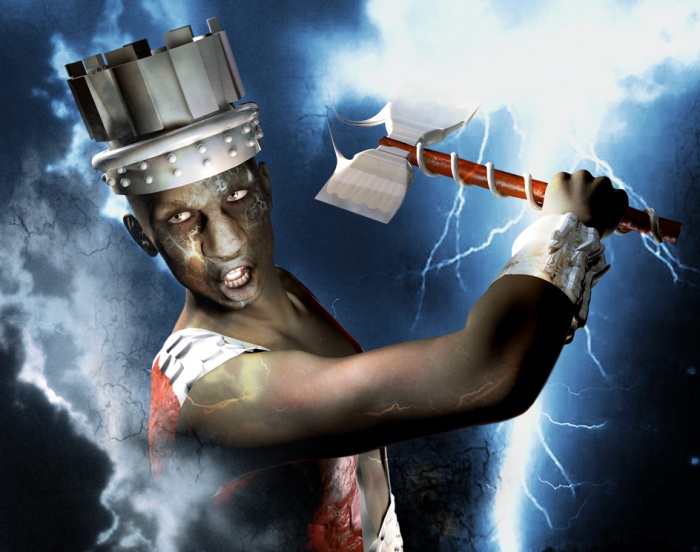
Changó or Shangó
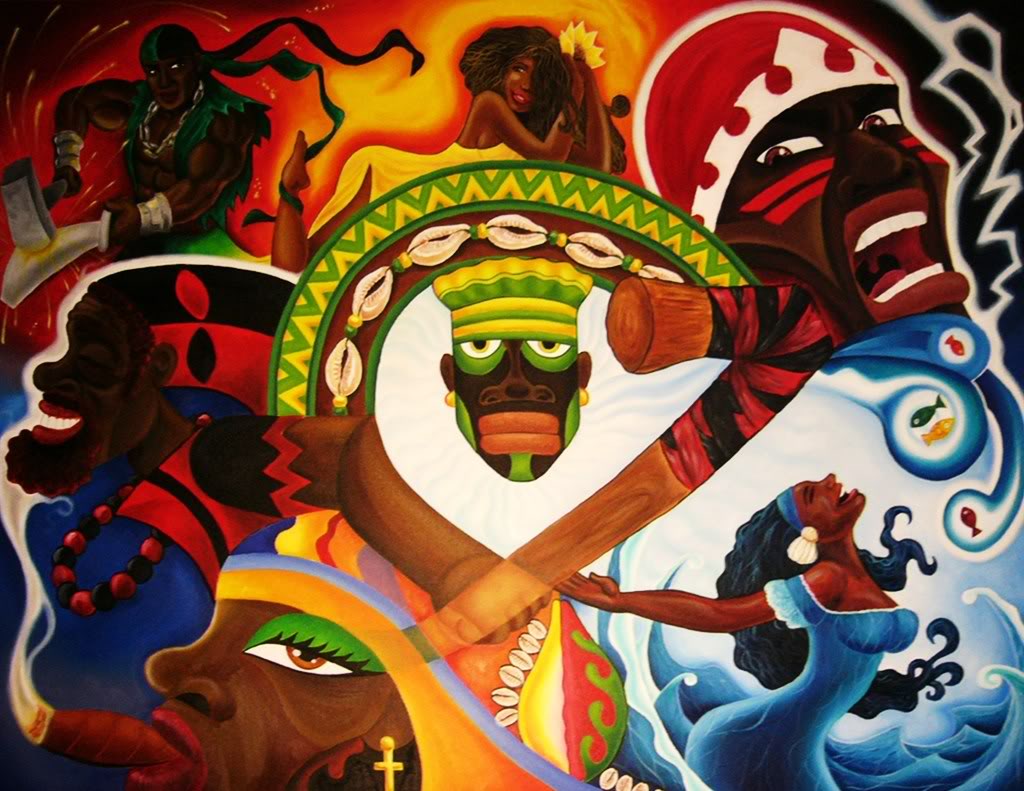
God of virility, of masculinity, of fire, of lightning and thunder, of war, Lord of the batá drums, of dance and of music. Perhaps inspired by a mythical Yoruba king of the kingdom of Oyo. The unwanted son of Yemayá, born of a rape, but protected by Obatalá. His Catholic saint, as with Obatalá, is strangely feminine and is Santa Barbara. His colors are white and red, and virile beauty. The word Changó means trouble; indeed he represents all human virtues and all human imperfections. He is hardworking, brave, a good friend, a diviner and a healer, but he is also a liar, a womanizer, quarrelsome and a gambler. His days are Friday and the 4th of the month. Because of his such broad idea of life and of joy, it is said that he frightens the dead. He certainly does not wish to know suffering and sorrow. His objects are of a warlike nature: single- and double-edged axes, machete, spear, dagger, an arrow. He loves women, and so he has countless love affairs and quarrels with his rivals. He has several lovers, in addition to his official wives: Oyá, Obba Yurù and Ochún. When he begins to dance, he starts striking with his head, like a ram, toward the drums; he opens his eyes wide and shows his tongue; he brandishes his axe on high and touches his testicles. Then the true dance begins, with leaps, contortions and extravagant figures. His dance is warlike and erotic, with pronounced movements of the pelvic girdle. As the divinity of fire, he protects against burns and fires. He has a necklace of alternating white and red beads. Red is the symbol of love and of blood. He always keeps company with Elegguá, of whom it is said he is Ocanani, which means made of a single heart, inseparable. The nature of Changó finds its clearest representation in the fall of a lightning bolt, in the speed with which fire can devour whatever it meets on its path. Legend has it that the divinatory powers of Ifá originally belonged to this Orisha, and that he ceded them to Orula in exchange for skill in dance.